
Green Factory

- Home
- Environment
- Green Factory
Green Factory
- Copied
Environmental Management Strategy
Upholding the principle of integrity, Hsin Tung Yang actively responds to the supply chain risks posed by climate change and supports the goals of the Paris Agreement. We plan greenhouse gas, water and electricity, and waste management mechanisms for each operating site, comprehensively advancing "energy saving, low carbon, and clean production," striving to become a sustainable food enterprise that balances environmental protection with operational growth.
Environmental Management Measures for Green Factory Operations
Green Production Management Measures (2023–2025)
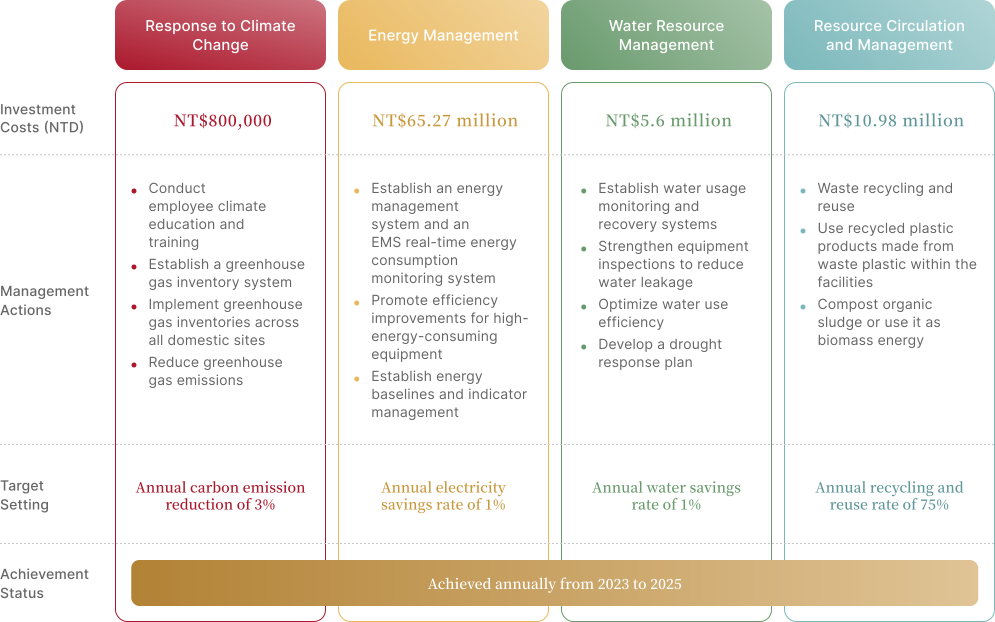
Green Production
Factory Milestones
Starting from the Dayuan Plant, Hsin Tung Yang has progressively transitioned from green production toward low-carbon transformation, elevating environmental management from operational improvement to a core corporate strategy. Through the implementation of green transformation management mechanisms, the Company has not only optimized energy and resource use efficiency but also established a cross-departmental collaborative carbon reduction system.
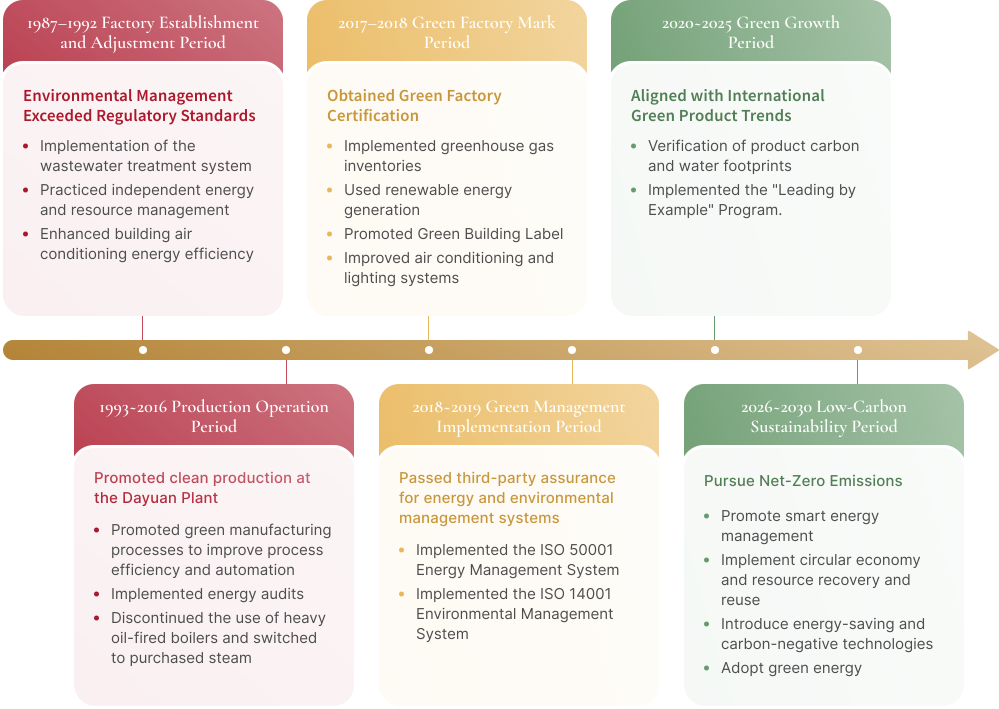
Green Factory
Hsin Tung Yang actively invests in sustainable development. In 2016, the Company became a pioneer in promoting green factories within Taiwan’s food industry. In 2020, it became "the first food company in Taiwan to obtain dual certification for traceability at a green factory" and received the "Green Leadership Award" at the international Asia Responsible Entrepreneurship Awards (AREA).
2016
Launched the Green Factory Mark Promotion Project
2020
Became “Taiwan’s First Green Food Factory to Obtain Dual Traceability Certifications”
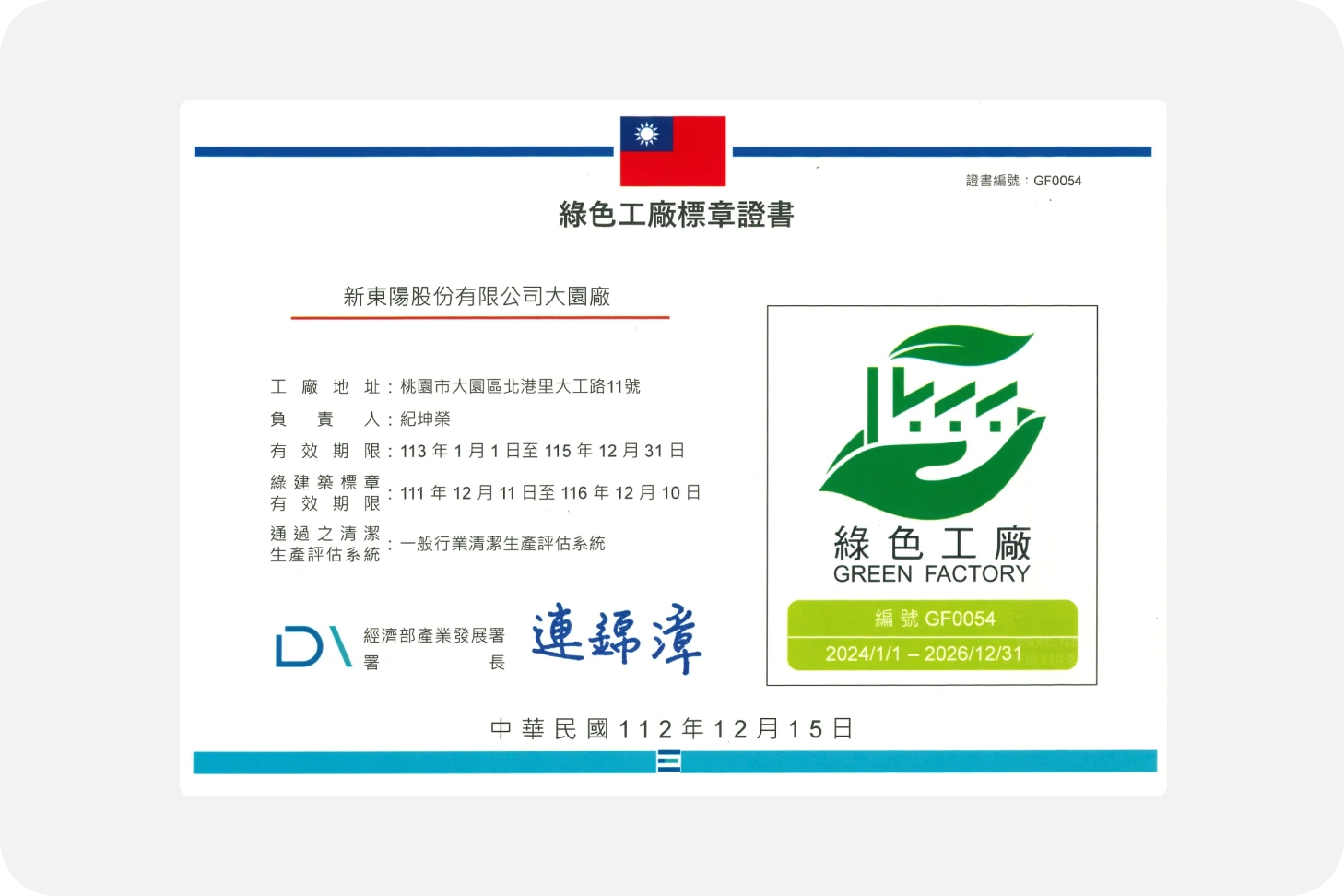
Green Factory Management Strategy
Through the evaluation of various qualitative and quantitative indicators, Hsin Tung Yang has continuously obtained the "Conformity Determination Certificate for the Clean Production Assessment System" since 2018 (with the latest validity period extending through December 2026). While increasing production capacity, the Company also reduces carbon emissions, actively promotes the participation of the entire value chain in sustainability, and establishes brand advantages for the food industry in sustainable development.
Eco-Design of Products
Water Resource Management
Green Production Processes
Energy Management
Waste Management
Green Factory Energy-Saving and Carbon Management Roadmap
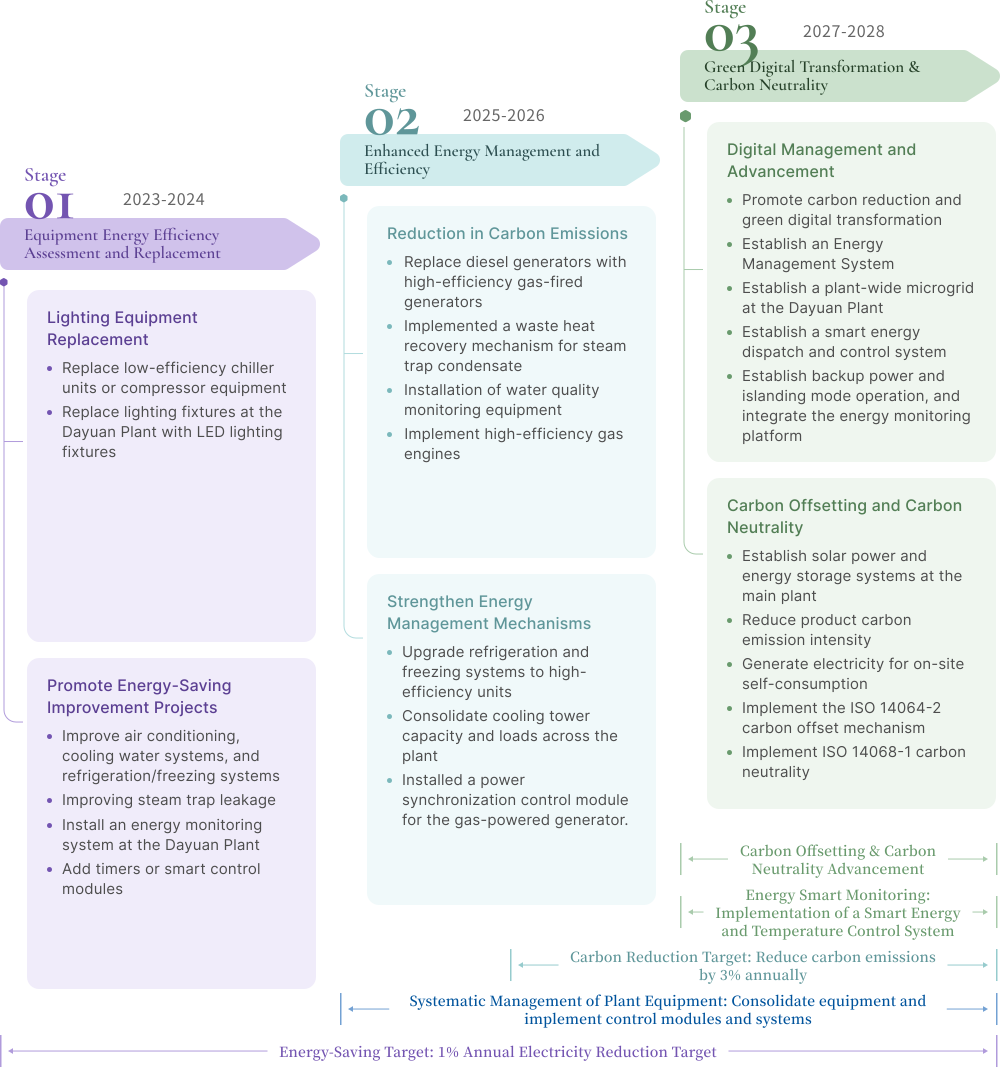
To achieve net-zero carbon emissions by 2050, Hsin Tung Yang has set concrete targets of "1% electricity savings per year and a 3% annual reduction in carbon emissions." We have now entered the 2026–2030 "Low-Carbon Sustainability Phase," in which we will thoroughly embed sustainable development into corporate operations by upgrading energy-saving equipment, promoting low-carbon processes and resource circulation, and concurrently planning negative-carbon technologies and carbon offset measures.
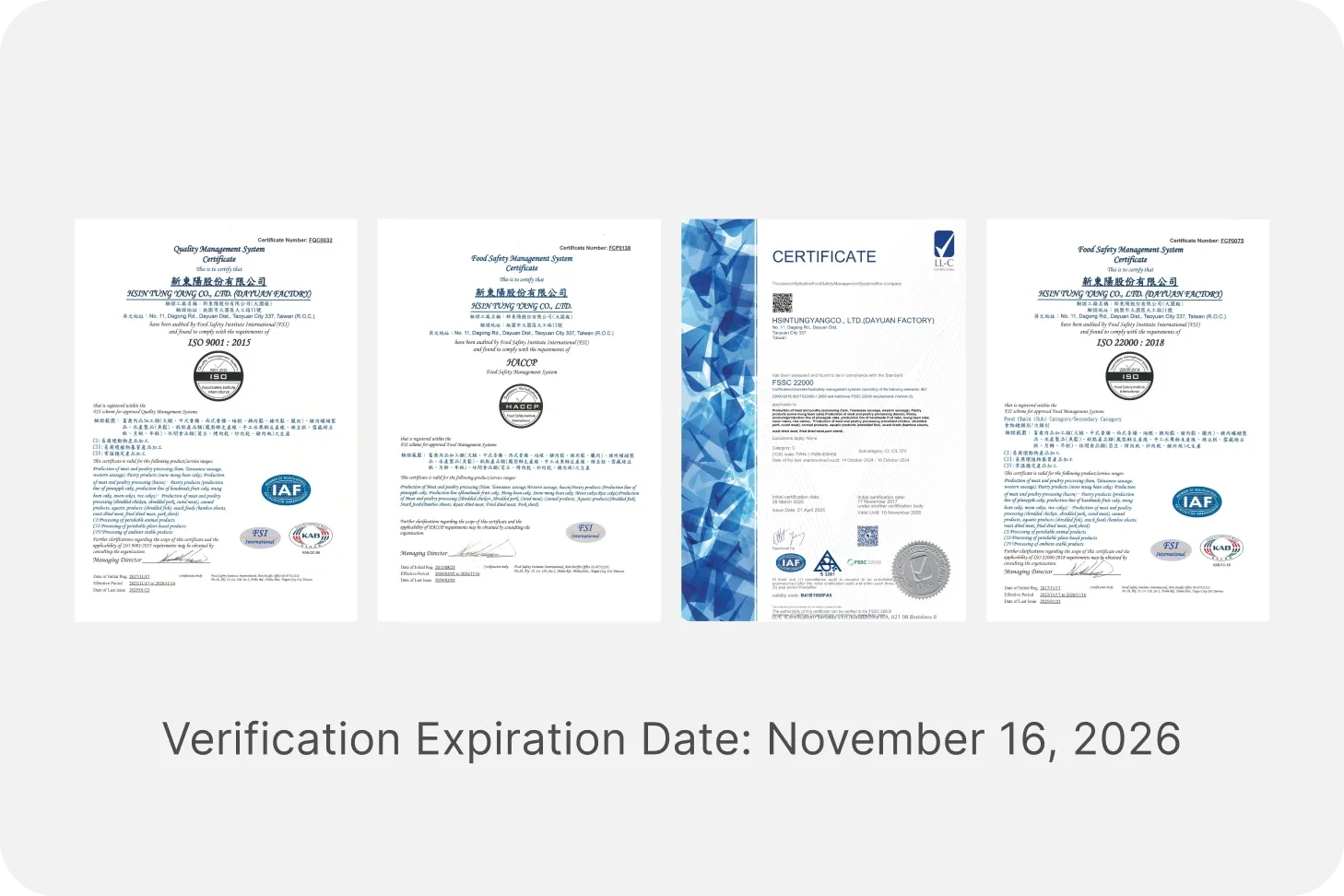
Hsin Tung Yang has actively adopted international food safety certifications such as ISO 22000, HACCP, and FSSC 22000. The Dayuan Plant has passed third-party assurance of international food safety management systems; in 2025, certified output reached 3,699 metric tons, accounting for 85% of total output, continuing to provide consumers with safe and reassuring product quality assurance.
Production Output of the Dayuan Plant from 2023 to 2025
Sustainable Employee Dining Facilities
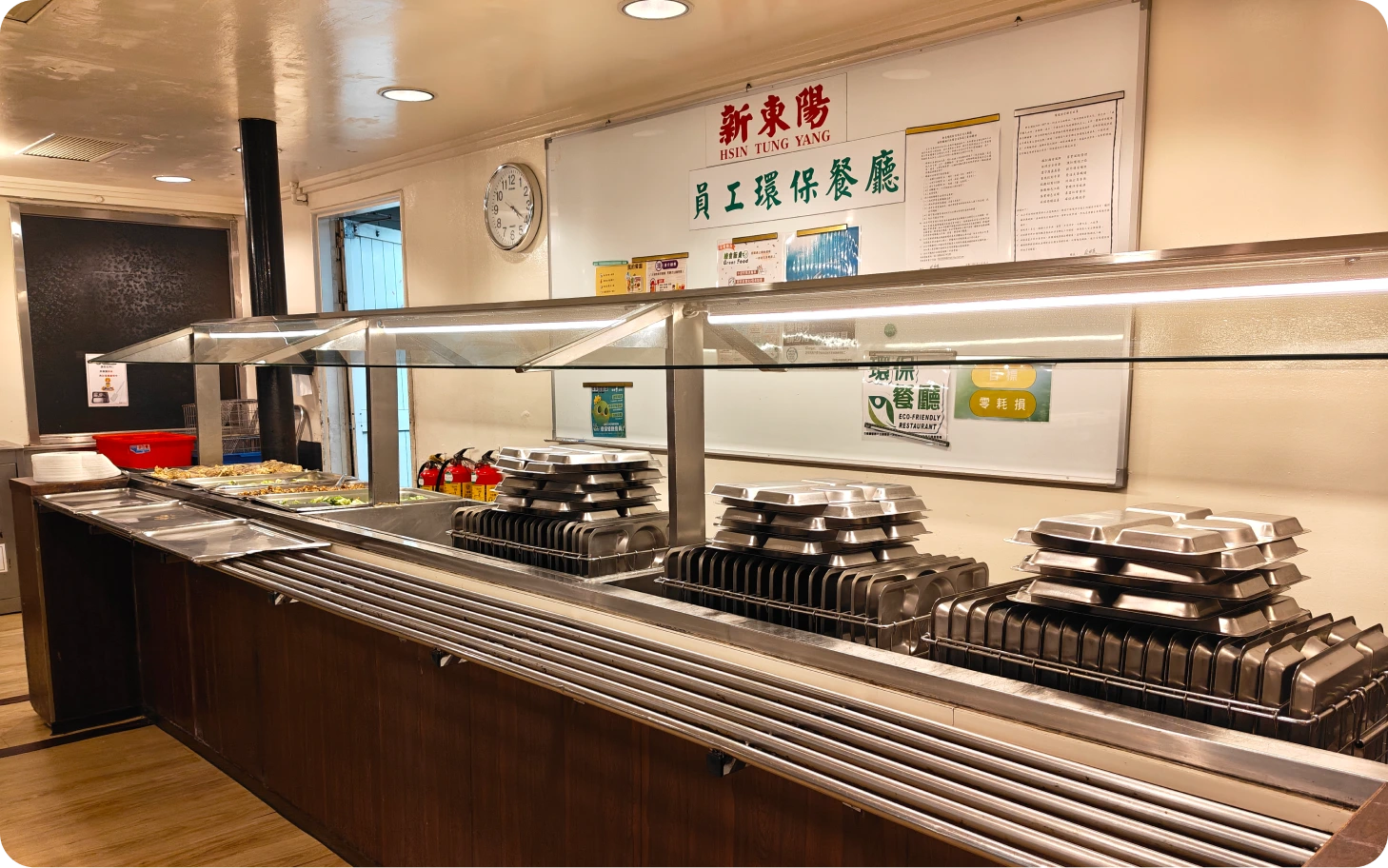
Hsin Tung Yang continues to enhance its production processes and extends its environmentally friendly philosophy to employees’ daily dining practices. The employee eco-friendly restaurant at the Dayuan Plant supports green transformation by establishing a sustainable food service model. In 2025, the implementation results of the Dayuan Plant employee restaurant exceeded the requirements of green dining table standards and obtained the Ministry of Environment’s "Eco-Friendly Restaurant" certification. The Company also aims to complete a transition plan to obtain the "Green Food" certification by 2027, providing employees with a dining experience that is both healthy and environmentally friendly.
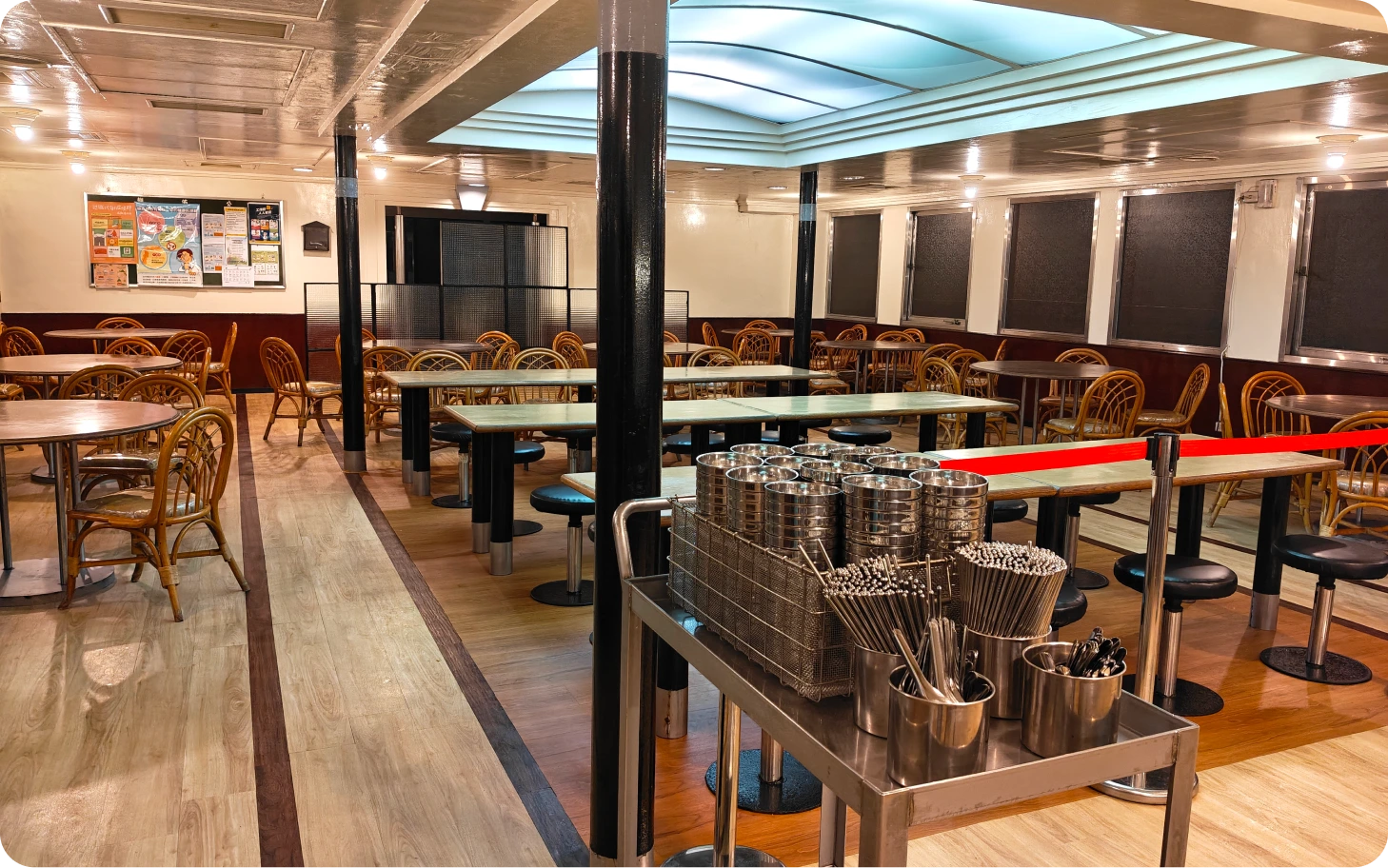

Source Reduction of Waste Sustainable Procurement
- Switched entirely to reusable tableware starting in 2021
- Prioritize procuring locally sourced ingredients to reduce
transportation-related carbon emissions

Economy Principles
Sludge Resource Recovery Waste Management
- Convert food processing sludge into raw materials for biogas power or Solid Recovered
Fuel (SRF) - Disassemble discarded products and integrate them into the food waste recycling system
to reduce waste generation

Factory Energy Conservation Plan Water Resource Management
- The employee cafeteria adopts energy-saving equipment and installs a solar power
generation system - Establish a digital water management system to recycle and reuse water resources

Enhance Employees’ Awareness of “Net Zero Green Living”
- Regularly conduct environmental education and training and promote environmental awareness
through communications materials, incorporating the principles of food conservation and waste
reduction into daily practices.
- Copied