
Identification of Material Topics

- Home
- Governance
- Identification of Material Topics
Identification of Material Topics

Share on
- Copied
Identification of Material Topics
GRI 2-6、GRI 3-1、GRI 3-2
The identification and management of sustainability issues and stakeholders form the foundation of Hsin Tung Yang's sustainability governance. In identifying, assessing, and responding to sustainability-related issues, the Company references internationally recognized sustainability reporting standards and frameworks, and follows the AA1000 AccountAbility Principles (AA1000AP, 2018)—Inclusivity, Materiality, Responsiveness, and Impact—while incorporating stakeholder inclusivity throughout the identification, analysis, and response process.
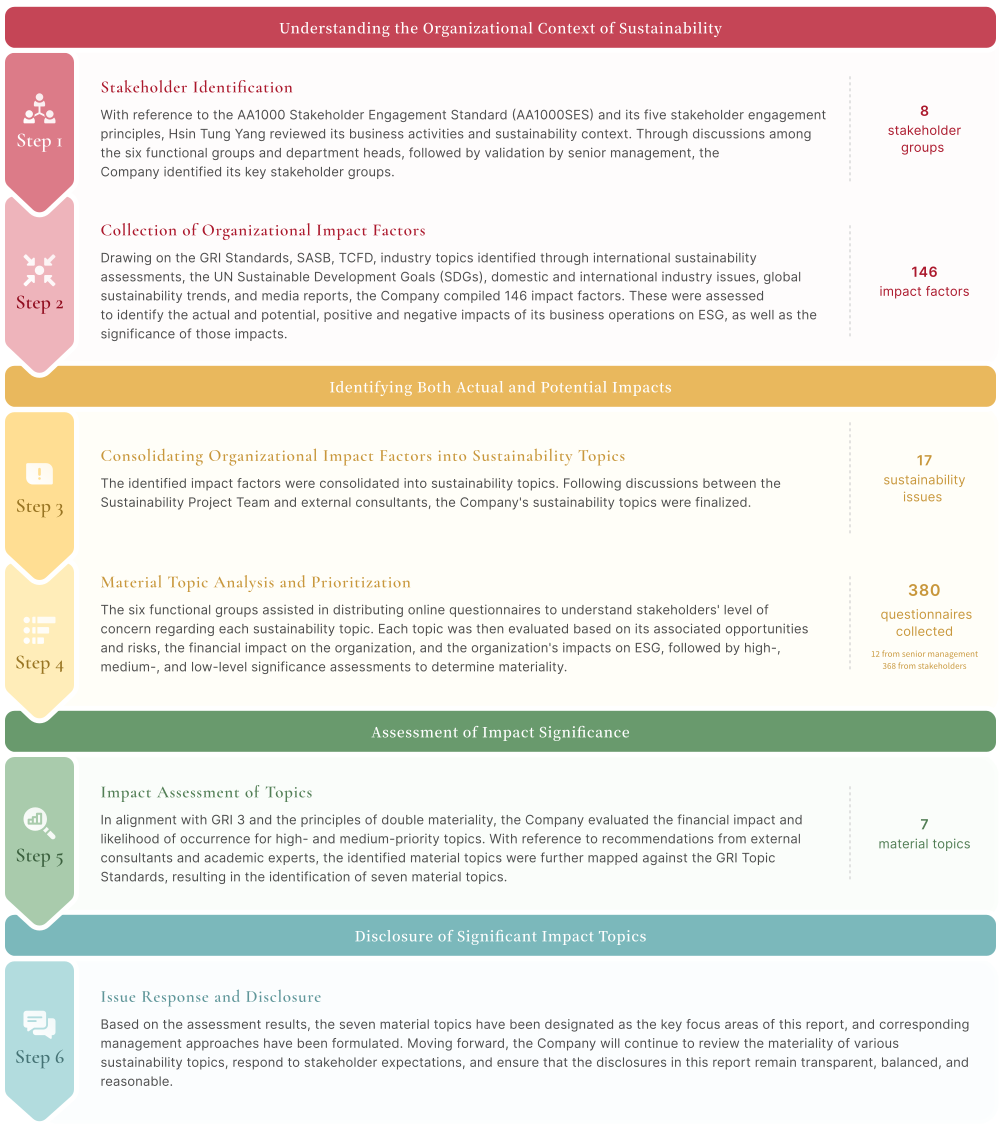
Material Topics Matrix
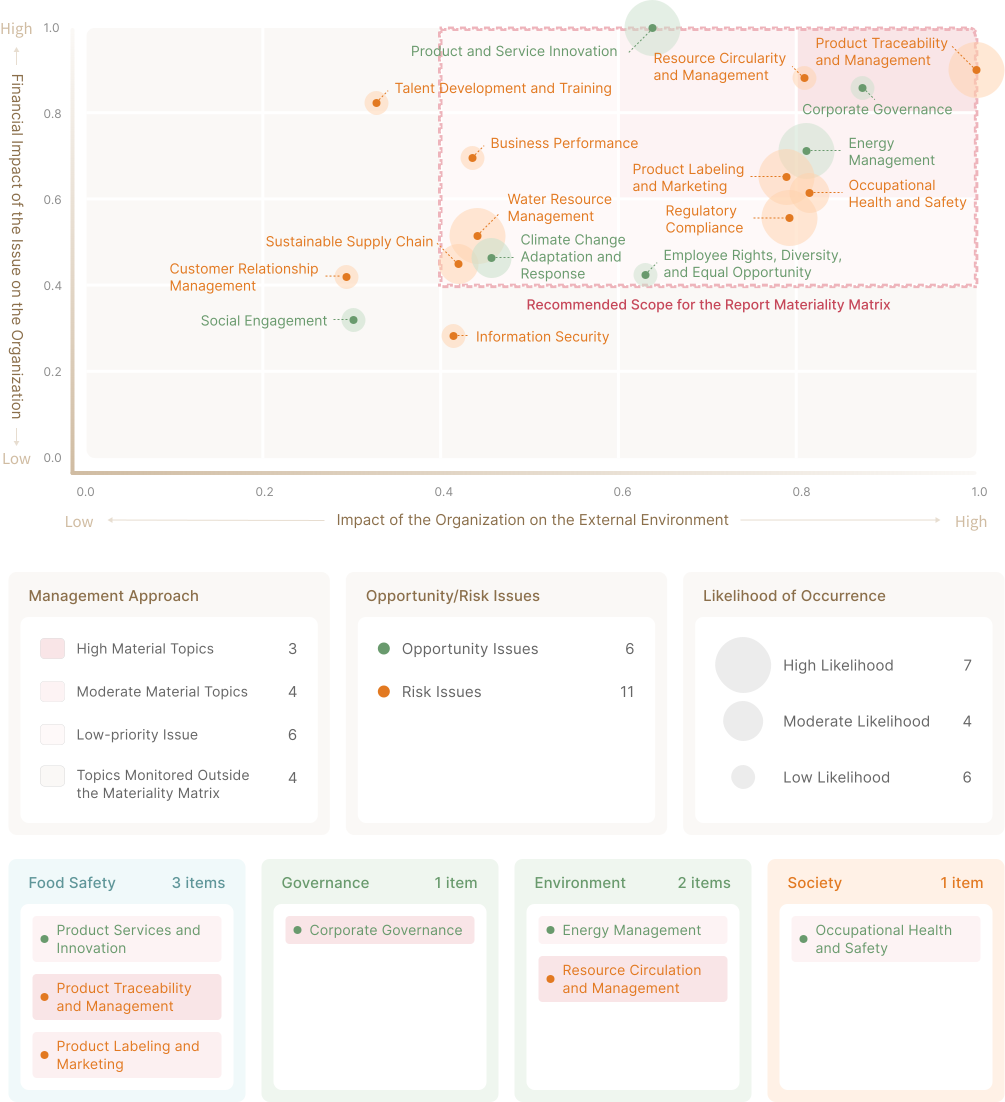
Explanation of Changes to Material Topics
| Material Topic | Significance | Changes | Description of Revisions | |
|---|---|---|---|---|
| 2019 | 2025 | |||
| Resource Circulation and Management | - | High | Addition | This indicates that Hsin Tung Yang is expected to demonstrate effective resource circularity management strategies to ensure the proper management of raw materials and waste, while addressing the high level of attention and expectations from both stakeholders and senior management. |
| Operational Performance | Important | Low | Decline | As Hsin Tung Yang has consistently upheld the principles of integrity management conduct while maintaining stable operational management through the development of diversified sales channels, the significance of this topic has decreased slightly. |
Material Topics and the Value Chain
| Sustainability Aspects | Material Topic | GRI Topic Standards | Impact Dimension | Opportunity Risk | Scope of Value Chain Impact | Response Section | ||||
|---|---|---|---|---|---|---|---|---|---|---|
| Upstream | Operations | Downstream | ||||||||
| Procurement of Raw Materials | Research and Development | Manufacturing and Production | Channel Management | Warehousing Logistics Distribution | ||||||
| Governance | Corporate Governance | 205 Anti-corruption 206 Anti-competitive Behavior | Potential positive | Opportunity |  |  | | | | Chapter 1 |
| Environment | Energy Management | 302 Energy | Potential positive | Opportunity | | | | | | Chapter 2 |
| esource Circulation and Management | 306 Waste | Potential negative | Risk | | | | | | ||
| Food Safety | Product Traceability and Management | 416 Customer Health and Safety | Potential negative | Risk | | | | | | Chapter 3 |
| Product Services and Innovation | Customized Topic | Potential positive | Opportunity | | | | - | - | ||
| Product Labeling and Marketing | 417 Marketing and Labeling | Potential negative | Risk | | | | | - | ||
| Society | Occupational Health and Safety | 403 Occupational Health and Safety | Potential negative | Risk |  | | | | | Chapter 5 |
*Note: Definitions of Value Chain Impacts:
Cause :Refers to impacts that the organization has caused through its own activities.
Contribute to :efers to impacts that the organization's activities have contributed to, facilitated, or incentivized another entity to cause.
Directly Linked :Refers to negative impacts that the organization has neither caused nor contributed to, but which are directly linked to its operations, products, or services through its business relationships.
Cause
:Refers to impacts that the organization has caused through its own activities.Contribute to
:efers to impacts that the organization's activities have contributed to, facilitated, or incentivized another entity to cause. Directly Linked
:Refers to negative impacts that the organization has neither caused nor contributed to, but which are directly linked to its operations, products, or services through its business relationships.
Share on
- Copied